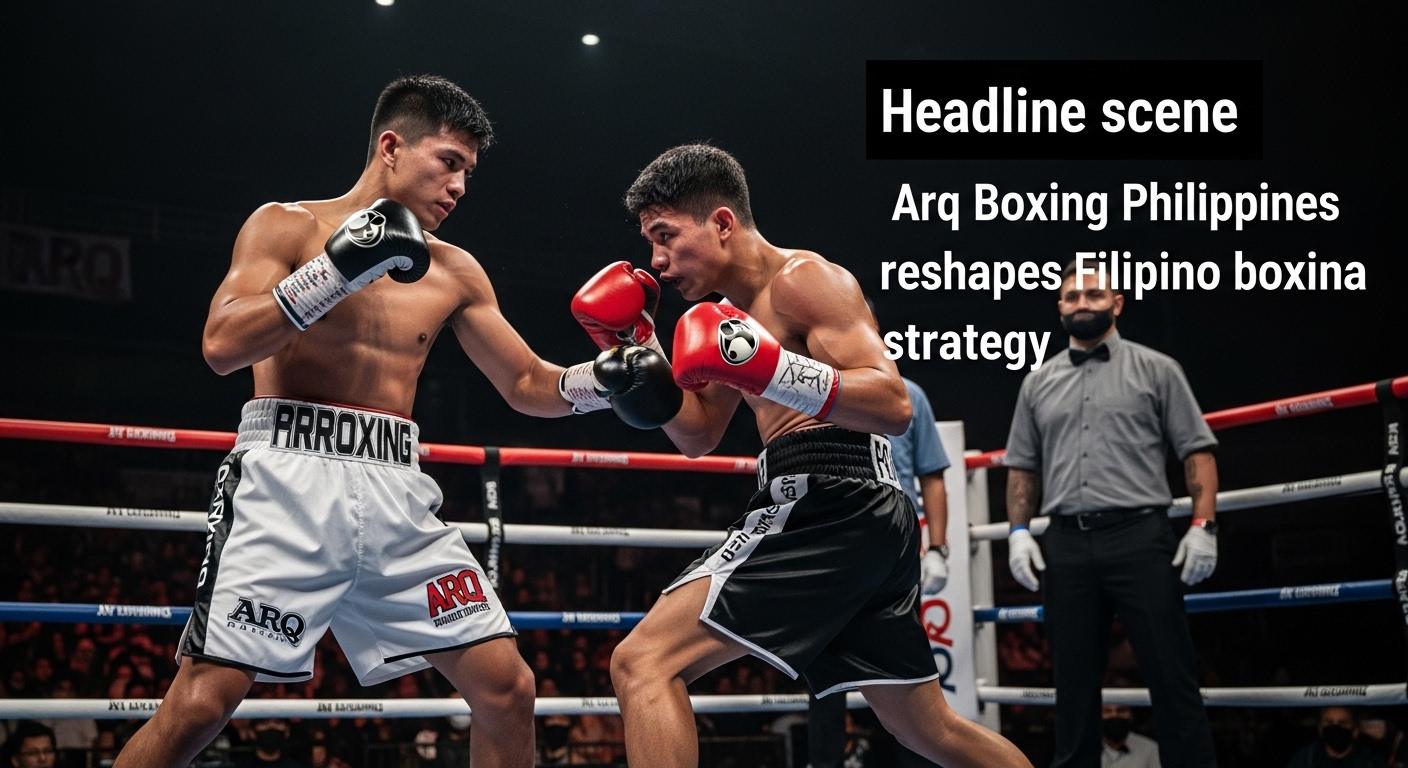
arq Boxing Philippines has positioned itself as a strategic incubator for Filipino boxing, aiming to knit together local grit with international standards. The approach goes beyond fight night headlines: it envisions structured coaching, systematic fighter development, and a more deliberate bridge to regional and global opportunities. In a landscape where talent can outpace support, the organization’s moves matter for both fighters and fans who track the sport’s evolution in the Philippines and nearby markets.
A new engine for talent development
Recent reporting from Cebu Daily News highlights a shift in leadership within ARQ Boxing Stable, noting the appointment of veteran trainer Fernando Ocon as the new chief coach. The decision suggests an emphasis on formal coaching ranks, standardized training cycles, and longer-term athlete development pipelines rather than episodic talent bursts. A structured framework—coaches, camps, and measurable milestones—could help young fighters progress from amateur or local circuits into pro ranks with clearer strategic maps. While leadership changes alone do not guarantee championship careers, they do signal a commitment to predictable, repeatable progress for athletes who often juggle schooling, jobs, and demanding training schedules.
Analysts view this as part of a broader trend: teams in Southeast Asia increasingly invest in coaching depth to convert raw potential into durable competitive advantage. For arq Boxing Philippines, the payoff would be a more resilient talent pool that can contend for regional titles and attract sponsors who favor a credible development pathway. The practical implications touch every level of the sport—from gym rosters and sparring partnerships to medical oversight, weight-management plans, and performance analytics that translate in the ring.
Rising contenders and market opportunities
Filipino boxing has long produced a steady stream of talented fighters, and recent coverage of Sumabong’s march toward a strawweight title shot underscores the depth of the talent pool in the archipelago. The Ring Magazine profile outlines a fighter on the cusp of challenging for a title, a development that reflects not only individual skill but the ecosystem surrounding their ascent—coaching, regional competition, and the potential for cross-promotional exposure. For arq Boxing Philippines, such rising contenders represent both a proof of concept and a marketing hook: a narrative arc that can attract broadcast partners, sponsorships, and international sanctions bodies seeking regional content with global appeal.
The market dynamics are nuanced. A strong domestic scene provides a stable base of followers, while strategic partnerships with regional promotions can extend a fighter’s reach to Asia-Pacific markets, where fighting groups increasingly look to Southeast Asian talent. For fans in the Philippines, this translates into more televised bouts, more opportunities to watch homegrown athletes at higher levels, and a clearer pathway for local gyms to become incubators of regional champions. However, this ambition is tempered by operational realities: travel for cross-border competition, healthcare costs for fighters, and the need for consistent promotion schedules that maintain momentum between title opportunities.
Strategic challenges and scenario framing
Even with leadership courtesy and rising talent, the path to sustained impact for arq Boxing Philippines depends on several contextual factors. First, the ability to scale coaching quality across multiple camps matters; one strong chief coach is not enough if training resources are unevenly distributed. Second, market timing and media rights play a role in translating talent into revenue—broadcast windows, streaming options, and pay-per-view models shape how much value a fighter can extract from a given bout. Third, talent development benefits from a coherent health and safety framework, ensuring fighters can train aggressively while minimizing injury risk and career-shortening setbacks. Fourth, governance and transparency in talent negotiations contribute to long-term trust among fighters, sponsors, and fans. In a hypothetical five-year horizon, a well-executed development program paired with strategic media partnerships could produce a stable cycle of contenders who routinely contest regional titles and remain attractive to international promoters.
From a scenario perspective, three paths seem plausible: (1) a steady slope where more fighters reach title contention through formal camps and clearer progression ladders; (2) a growth phase driven by aggressive marketing and cross-border promotions that push one or two fighters into global spotlight; or (3) a plateau if funding, scheduling, or injury interruptions disrupt the pipeline. The most resilient scenario blends disciplined coaching with reliable event calendars and diversified revenue streams—ticket sales, streaming, sponsorships, and co-promotional arrangements—that buffer fighters from single-bout volatility.
Actionable Takeaways
- Fighters: Seek affiliations with established camps offering structured development, medical oversight, and visible progression ladders to pro status.
- Coaches and trainers: Invest in standardized metrics for progress (strength, speed, fight IQ) and maintain a transparent development log to communicate growth to promoters and sponsors.
- Promoters and stables: Build multi-city training networks to widen the talent pool, while securing media rights and streaming partnerships to monetize bouts beyond gate receipts.
- Managers and advisers: Prioritize long-term planning over short-term bout wins; negotiate milestone-based contracts that align fighter growth with stable revenues.
- Fans and local communities: Support programs that link gyms to schools or community centers, broadening the talent pipeline and sustaining local interest in boxing careers.
Source Context
For readers seeking original reporting that informs this analysis, consider the following sources: